Ġgantija's UNESCO buffer zone selflessly steps aside so a farmhouse can become flats before lunch
An excavator has begun clearing an old farmhouse for apartments beside the 5,500-year-old temple, on a heritage boundary that turned out to be wherever the architects needed it.
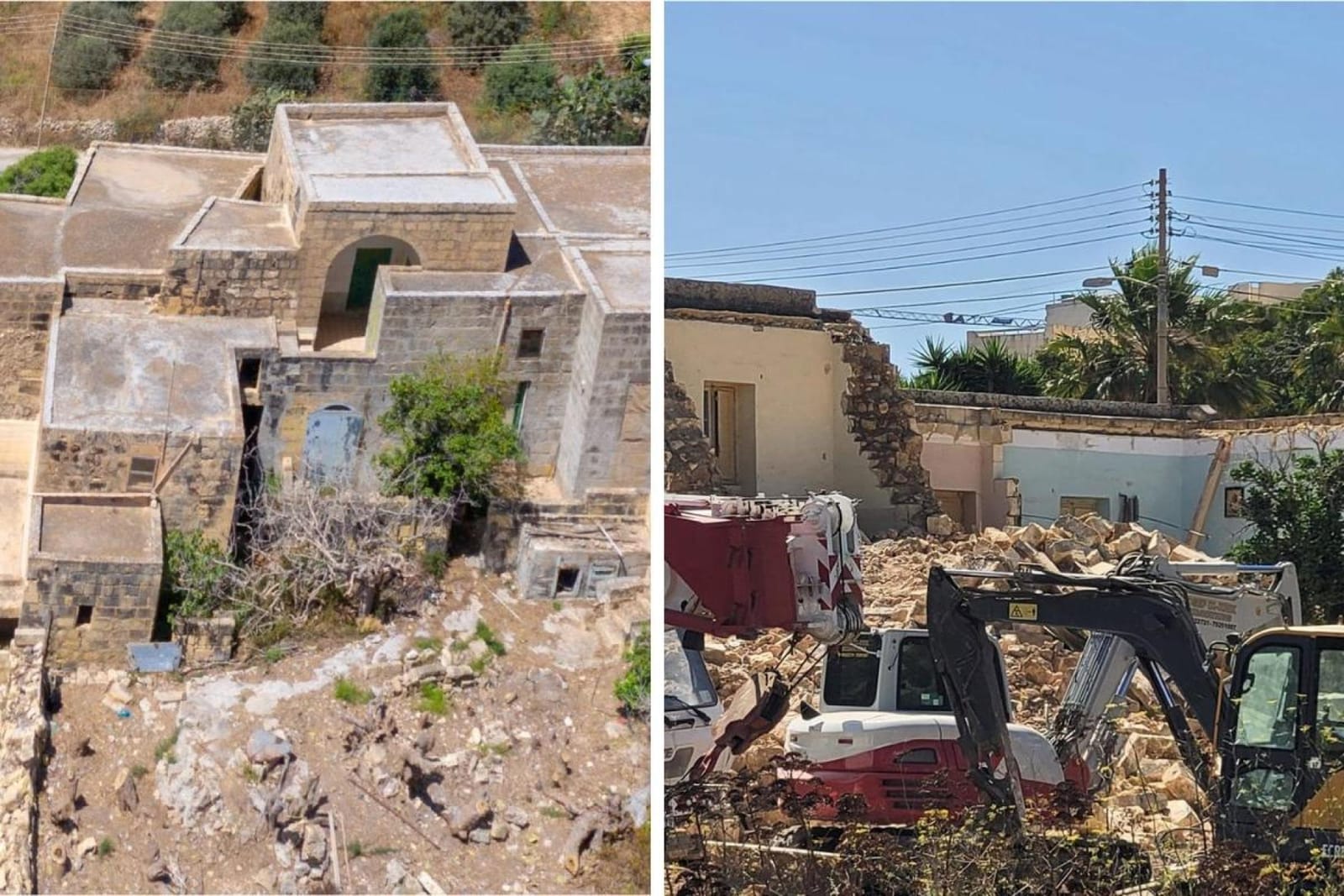
The cameras were rolling on Saturday morning and, in a lovely piece of timing, so were the excavators. Anyone hoping to see history made at Ġgantija was not disappointed: an old farmhouse in the buffer zone of Gozo’s 5,500-year-old temple, older than the pyramids and older than Stonehenge, was opened up to the sky in a single thrilling morning.
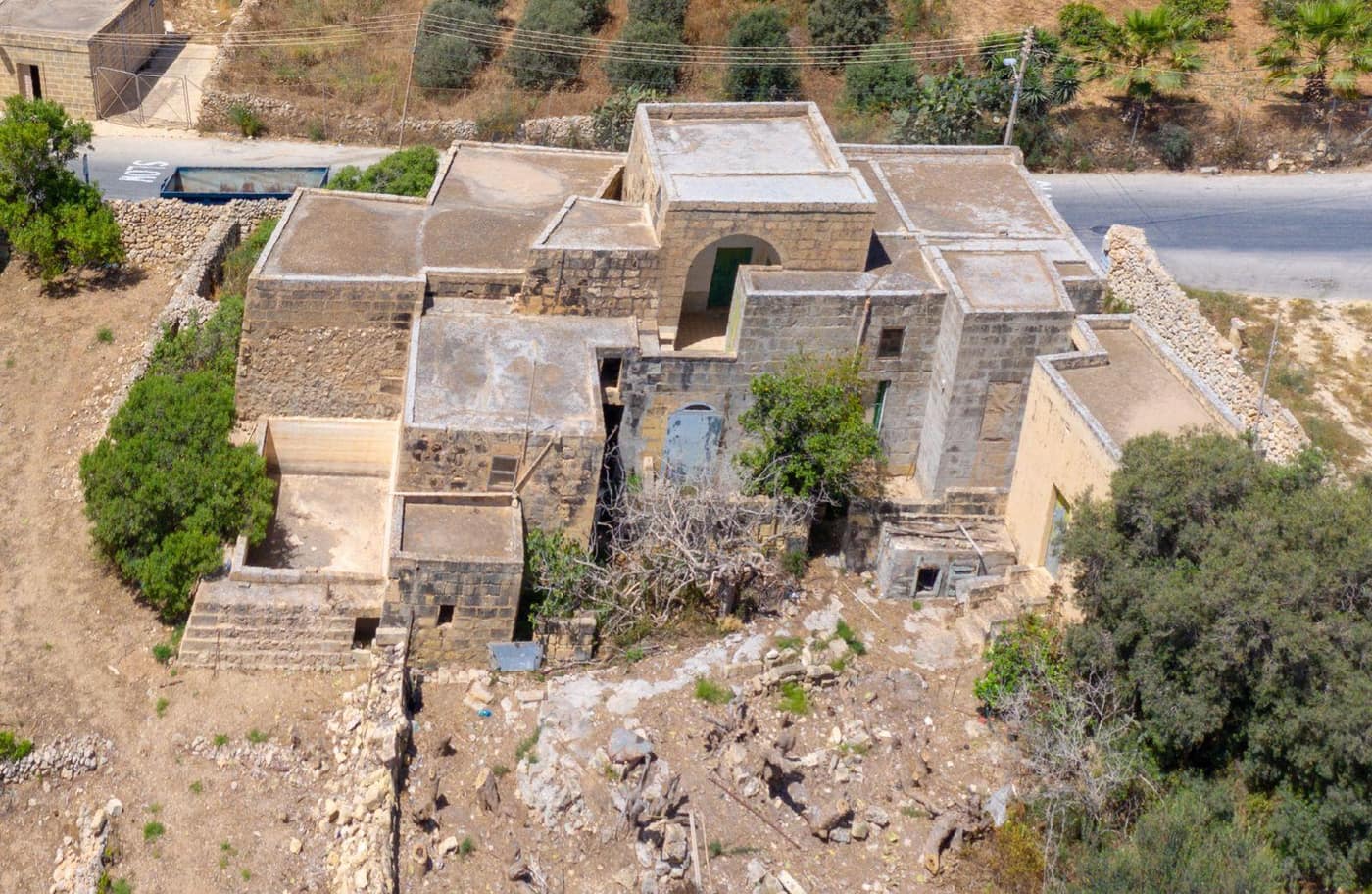 Photo: Din l-Art Ħelwa Gozo
 The boundary that came to us
Every great resort has a signature amenity. Ġgantija Heights has the most accommodating one yet: a UNESCO World Heritage buffer zone that knows when to make itself scarce. The architects, after careful study, placed the project comfortably outside the protected line. The Planning Authority agreed, warmly, by ten votes to one, the single dissenting voice belonging, as ever, to heritage. A newspaper later checked the map and found the line had been inside the site the whole time, which is the sort of detail a generous host simply does not raise with guests. The boundary, ever gracious, has agreed to consider itself elsewhere.
A monitor, on do-not-disturb
Approval came with one charming condition: an archaeological monitor would watch over every scrape of the ground, and no living rock would be excavated. Witnesses on Saturday reported no monitor at all, which we prefer to read as discretion. Think of it as the heritage equivalent of turndown service. The monitor respects your privacy so completely that the 5,500 years of context beneath the wheels are cleared without a single interruption: a small “do not disturb” sign, hung on prehistory.
Heritage, faithfully reissued
The plan honours the old farmhouse in the most contemporary way available: its facade will be carefully dismantled and rebuilt, the one wall worth keeping reinstalled at the front of 22 apartments and 20 garages, like a period frontispiece bound onto an entirely new book. The Heritage Impact Assessment that blessed the scheme was admirably candid, conceding the development would be “visually dominant in the landscape” before concluding, in the very same document, that its impact was “not significant”: two findings most reports would consider mutually exclusive, here generously holding hands. And should any doubt linger, take comfort in the official reasoning, which is elegantly complete: the block cannot possibly harm the temples, because had it been able to, it would never have been approved. A guarantee that proves itself.
A reception worthy of the setting
The opening stirred real feeling. Online the response ran to the hundreds, overwhelmingly furious and entirely engaged, which we are pleased to record as enthusiasm. A few wondered aloud why the festa and its fireworks command such national devotion while a 5,500-year-old World Heritage temple and its setting do not, and we would gently note that they have answered their own question. Malta knows precisely where its heart lies.
A diptych for the ages
Connoisseurs will admire the composition. On the left, the old farmhouse in honeyed stone. On the right, the same frame an hour later, an excavator arm reaching toward the rubble like the finger in Michelangelo’s Creation of Adam, only running backwards. It is a before-and-after worthy of any gallery, with the rare advantage that you can watch the “after” being painted in real time, in dust. “Five stars,” notes one recent visitor. “Arrived for a temple, left with an unbeatable view of an excavator.”
The temple has stood for five and a half thousand years with nobody to overlook it. That oversight is finally being addressed. Spare a thought, too, for its celebrated Neolithic sculptures, the rotund “fat ladies” shaped by the islands’ first artists: after a long age admiring only open fields, they are at last to be given a rotund concrete neighbour worthy of them. Ġgantija Heights: heritage you can move into, on a boundary that moves for you.